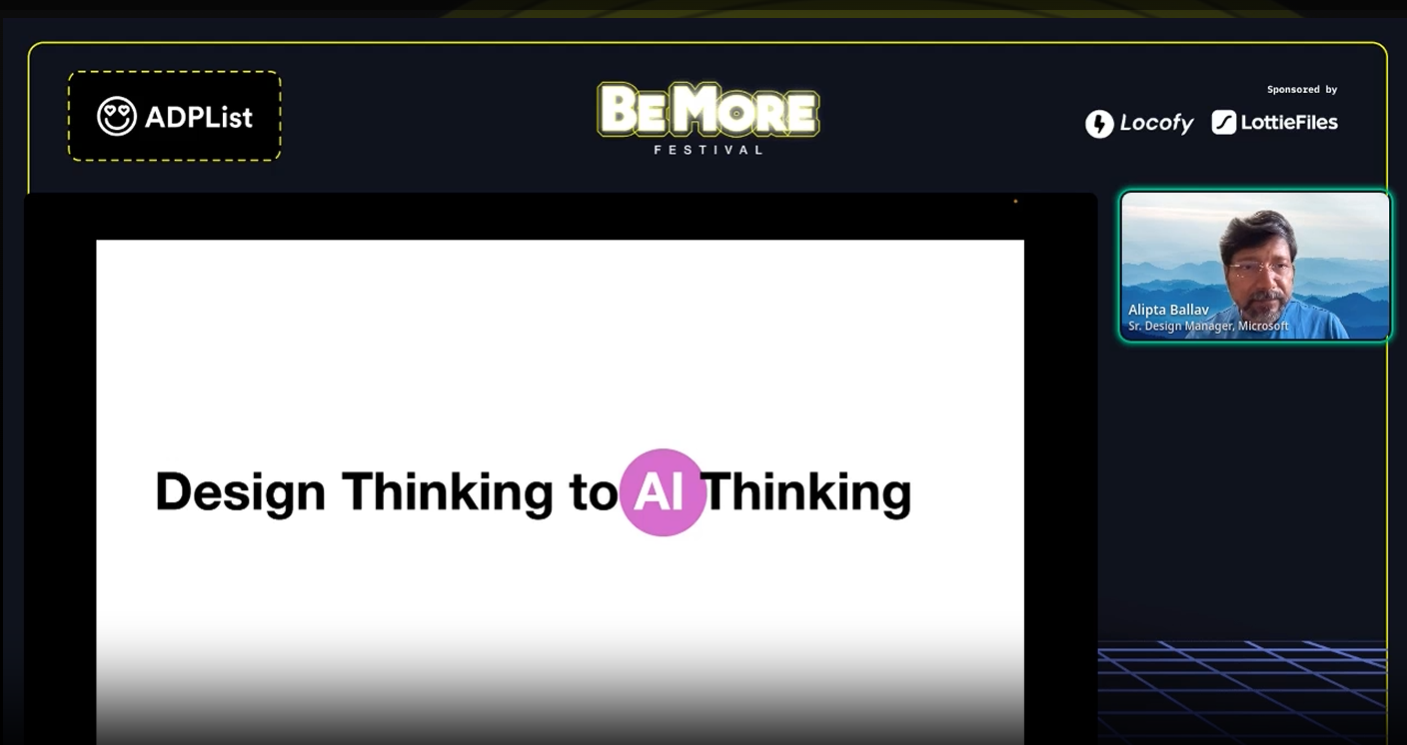
Day 37/100: Design Thinking to AI Thinking by Alipta Ballav
What: Redefining UX: Embracing AI and Design Thinking Alipta Ballav, Senior Design Manager at Microsoft, presented a thought-provoking shift in the UX design landscape during the BeMore Festival. The conversation centered on moving beyond the traditi...
What: Redefining UX: Embracing AI and Design Thinking
Alipta Ballav, Senior Design Manager at Microsoft, presented a thought-provoking shift in the UX design landscape during the BeMore Festival. The conversation centered on moving beyond the traditional "design thinking" methodology and adopting an AI-infused mindset that enhances how designers approach problems.
The Foundations of Design Thinking
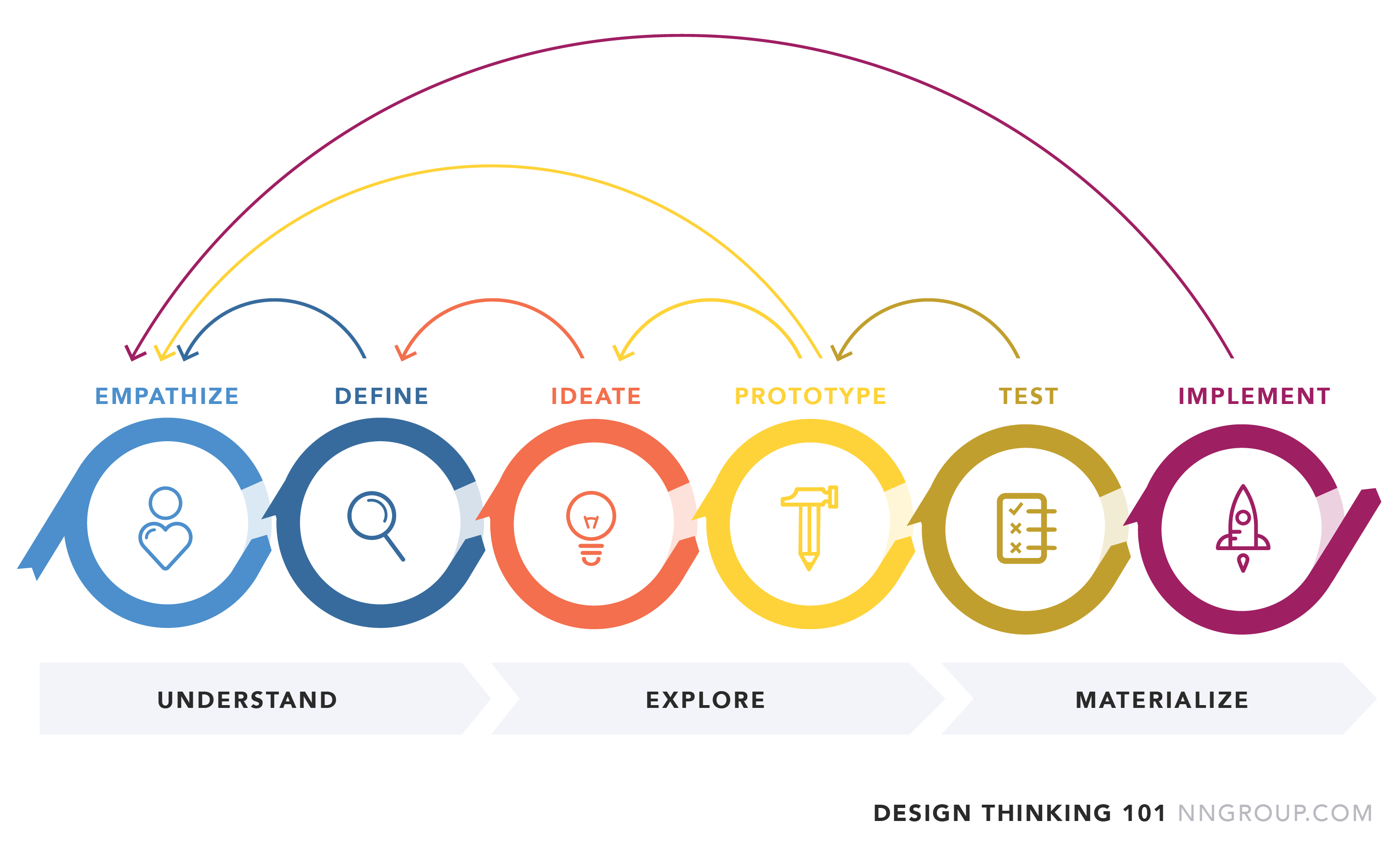
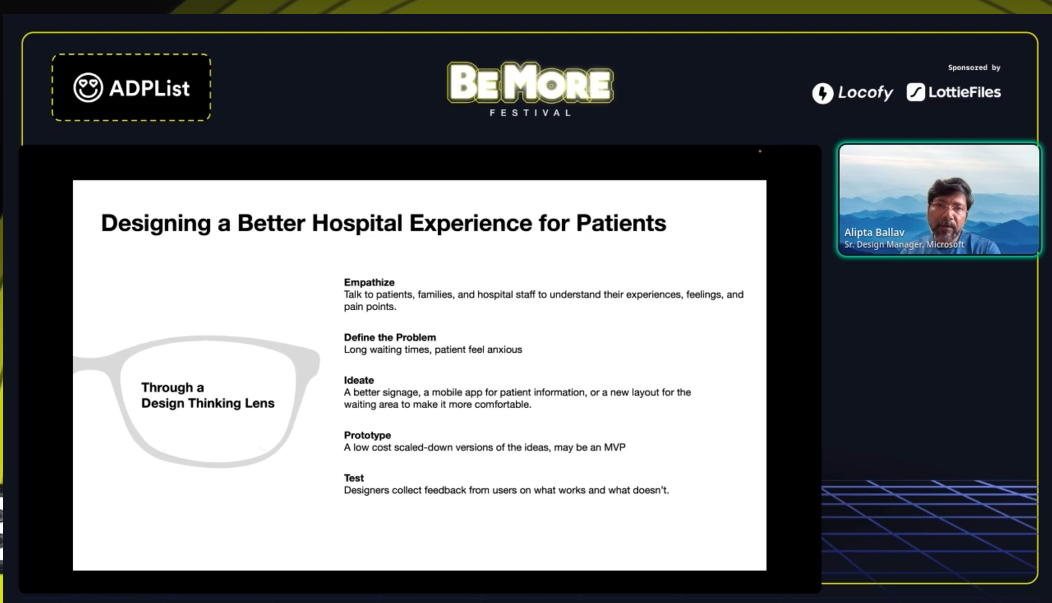
Design thinking has been a cornerstone in the world of UX design for years, focusing on empathy, defining problems, ideating solutions, prototyping, and testing. This user-centered process has been key in creating meaningful and innovative experiences for users.
Expanding the Designer's Toolkit with AI Thinking
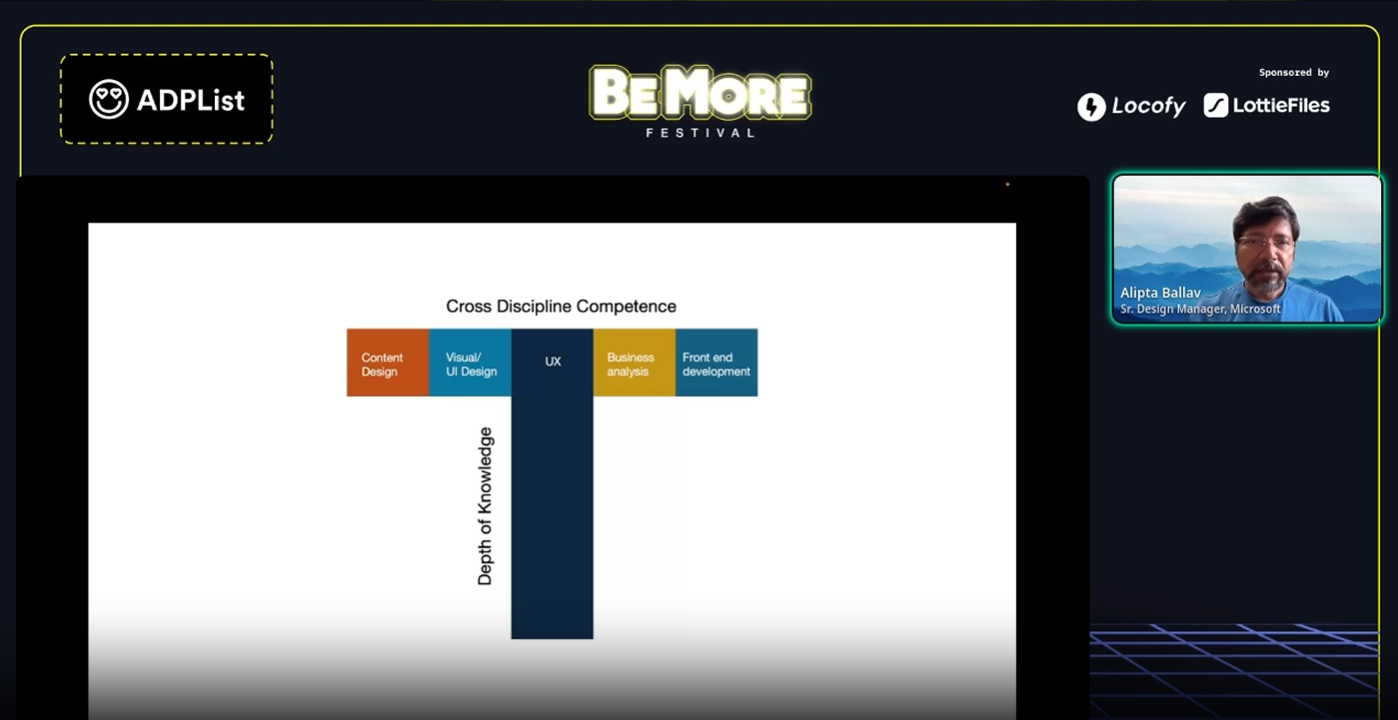
Ballav believes the future of design requires an expanded perspective. This new mindset, "AI thinking," involves looking at problems through a computational lens. By leveraging knowledge bases, understanding cultural nuances, and dealing with unstructured data, AI thinking allows designers to solve complex challenges with greater precision. This shift opens up new avenues for innovation, evolving beyond the confines of traditional design thinking.
Why: The Need for a Polymath Mindset in UX Design
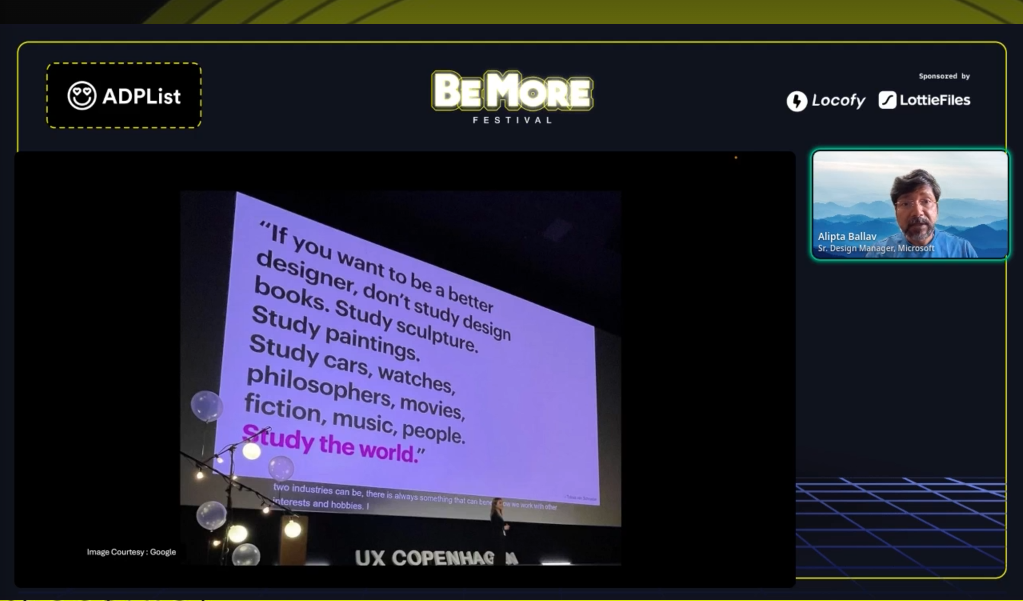
To stay relevant in a rapidly evolving industry, designers need to adopt a polymath mindset. Ballav draws inspiration from historical figures like Leonardo da Vinci, who is widely regarded as a polymath due to his expertise across multiple disciplines like civil engineering, chemistry, biology, and architecture. Similarly, the future of design will require professionals who can connect the dots between diverse fields like AI, economics, social sciences, business, psychology, and UX.
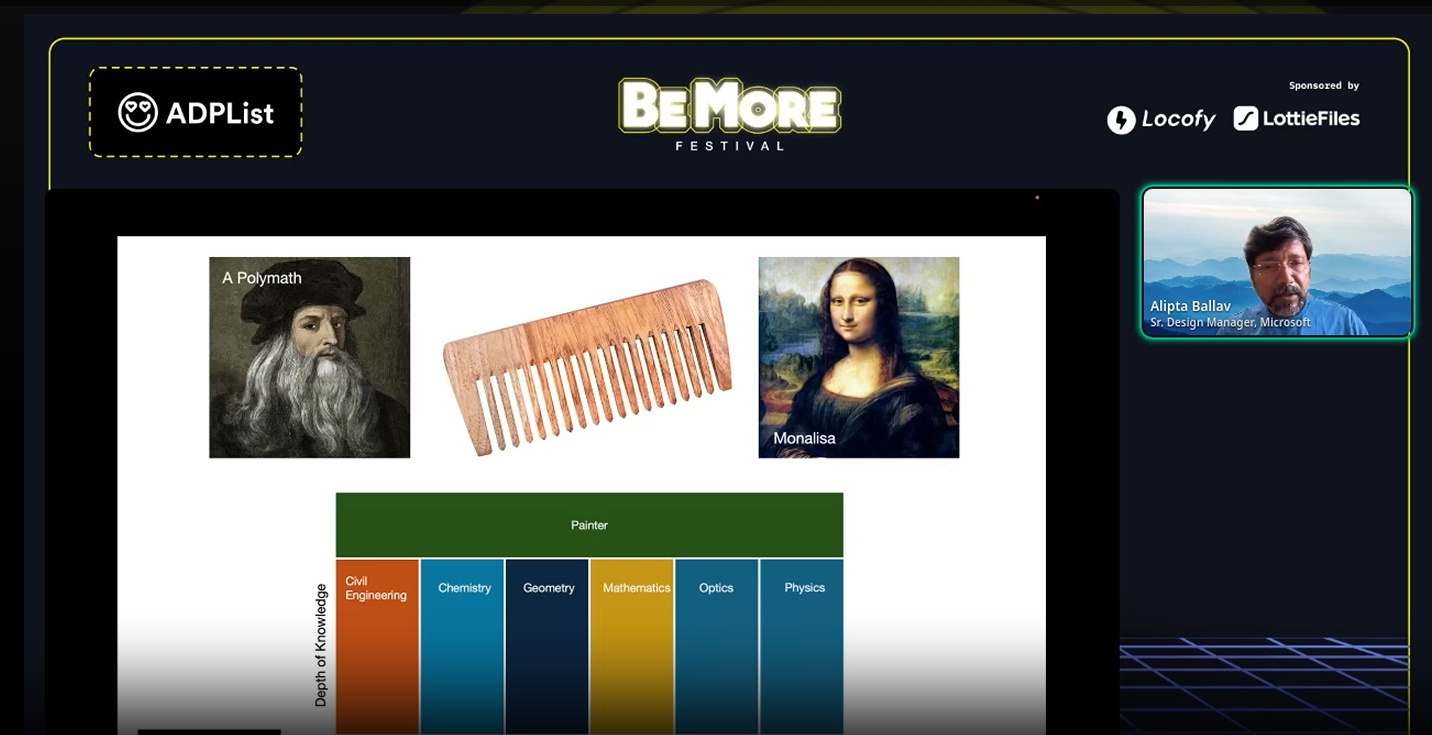
Reference to Leonardo da Vinci
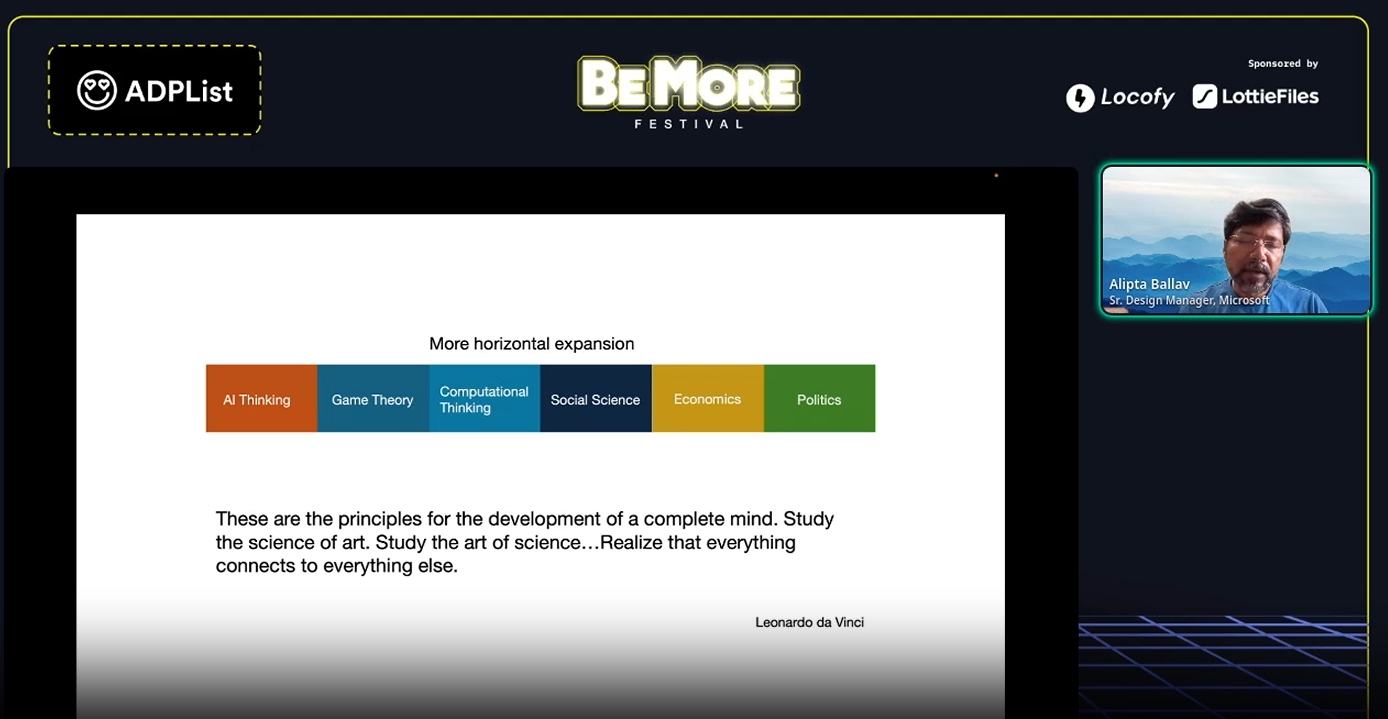
Ballav cited da Vinci as an example of the polymath ideal—a "comb set profile" where individuals possess deep expertise in multiple areas. This cross-disciplinary knowledge allows designers to approach problems from different angles and create more holistic solutions. He also referenced Don Norman’s views, who during his visit to India, mentioned that designers should not only focus on their craft but also consider economics, politics, and other subjects to better understand the world. Even Jakob Nielson has a similar take that the future of design will be more of a generalist, here is a recap article that I had written https://blog.karanbalaji.com/day-27-navigating-the-future-of-ux-specialist-vs-generalist-insights-with-jakob-nielsen-sarah-gibbons
Zooming Out for Broader Context
"Design is more about zooming out and less about zooming in," Ballav said, stressing that UX designers need to broaden their understanding of society, culture, and technology. The ability to connect the dots across different disciplines will enable designers to craft solutions that are not only innovative but also practical and rooted in real-world dynamics. In my previous article, Don Norman has a similar take which can be read here: https://blog.karanbalaji.com/day-31-don-norman-on-designing-beyond-aesthetics-embracing-a-humanitarian-centric-and-generalist-future
How: Applying AI Thinking in UX Design
Ballav provided real-world applications of how AI thinking can complement design thinking, particularly in improving hospital patient experiences. The screenshot below explains how it is done through design thinking lens.
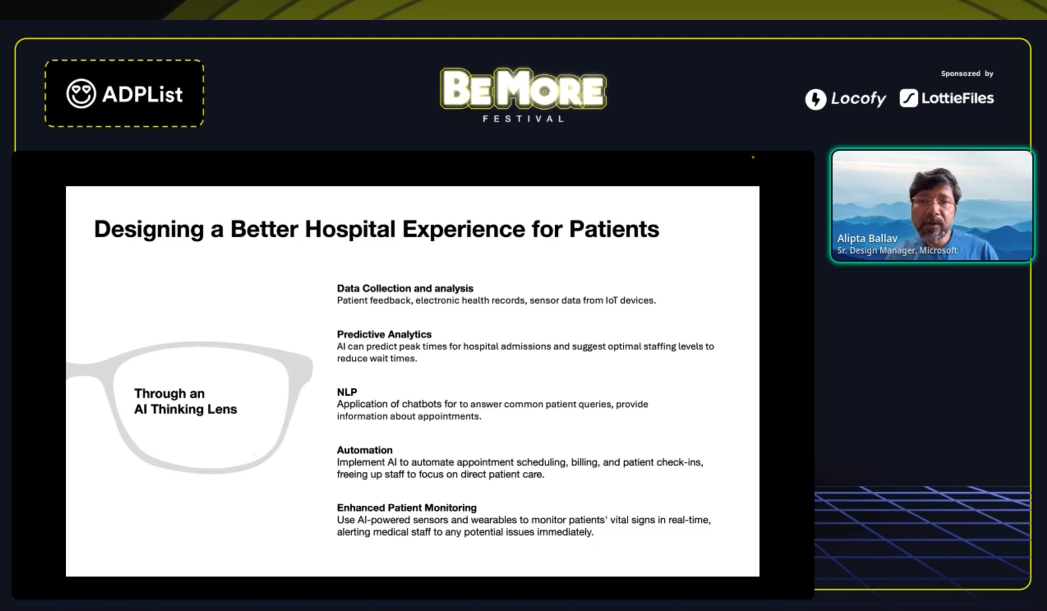
Through AI Thinking Lens:
Data Collection and Analysis
AI thinking starts with leveraging data from various sources like sensors, electronic health records, and user feedback. This data-driven approach provides a more comprehensive understanding of the problem that traditional research methods might overlook.
Predictive Analytics
By analyzing this data, designers can predict high-traffic periods in a hospital and suggest optimal staffing levels. This anticipation reduces wait times, optimizing the patient experience.
Automation and Chatbots
AI can streamline administrative tasks, such as scheduling and billing, by automating processes and deploying chatbots for common queries. This frees up medical staff to focus on personalized care, improving overall patient satisfaction.
Enhanced Patient Monitoring
AI-powered systems can monitor patients in real-time and alert staff to any critical changes, preventing complications and ensuring timely interventions.
Why AI and Design Thinking Work Together
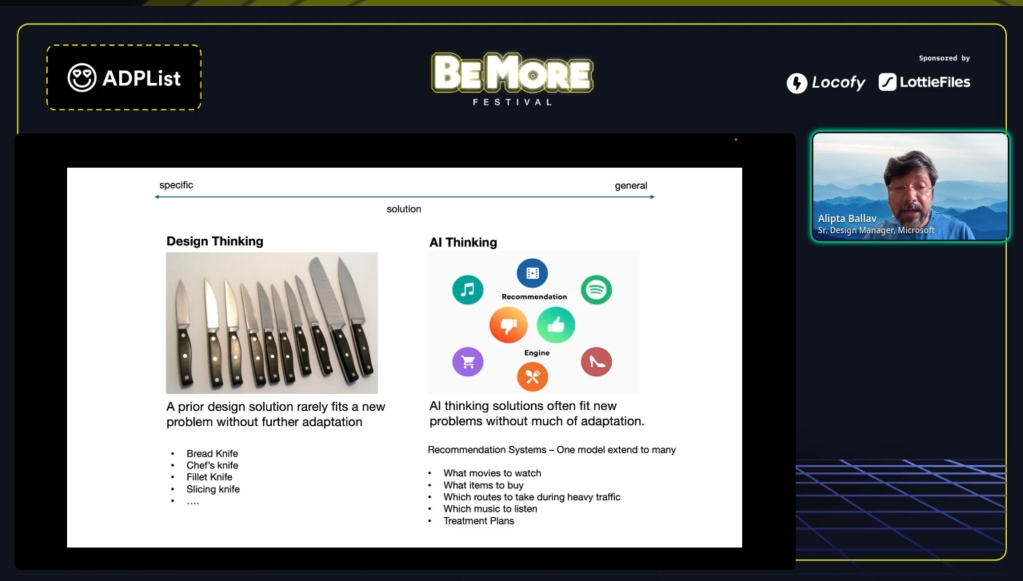
Ballav stresses that AI thinking doesn’t replace design thinking but acts as a catalyst, enabling designers to harness data-driven insights alongside their human-centered expertise. The symbiotic relationship between design and AI allows for more comprehensive problem-solving.
The Cultural Nuances of Common Sense
A key aspect of AI thinking is understanding cultural nuances and reasoning. Ballav gave an example of crossing the road to illustrate this. In countries like India, crossing the road doesn’t follow the same logic as in Western cultures, where people wait for signals. Instead, people actively navigate traffic by making cars stop—a behavior deeply rooted in cultural practice. This variance highlights the challenge of teaching AI to understand and respect cultural differences.
This example reminded me of Don Norman’s concept of cultural adaptation in design. He once shared that his kitchen design, while simple for him, would pose a challenge for anyone unfamiliar with it. Similarly, AI thinking requires designers to consider cultural reasoning when developing systems that cater to diverse backgrounds. This ability to understand multiple perspectives will help UX professionals create more personalized and inclusive experiences.
The Future of UX Design
As the world becomes increasingly digitized, the intersection of AI and design will be crucial in developing user-centric products. Designers who embrace this AI-infused mindset will lead the charge in creating innovative solutions for the future.
By adopting AI thinking, designers can expand their capabilities and adapt to the evolving needs of users in the digital age.