Day 9/100 in #100DaysOfDesign: Enhancing My UX Portfolio for a Seamless User Experience
(Why) - An Introduction to My UX Portfolio Journey ✍️ On Day 9 of my #100DaysOfDesign challenge, I dedicated my time to one of the most crucial aspects of my design journey - my UX portfolio. The portfolio isn't just a showcase of my work; it's a ref...
(Why) - An Introduction to My UX Portfolio Journey
✍️ On Day 9 of my #100DaysOfDesign challenge, I dedicated my time to one of the most crucial aspects of my design journey - my UX portfolio. The portfolio isn't just a showcase of my work; it's a reflection of my growth and commitment to delivering exceptional user experiences. Here's a glimpse into my day of improvements.
(What) - Transforming My UX Portfolio
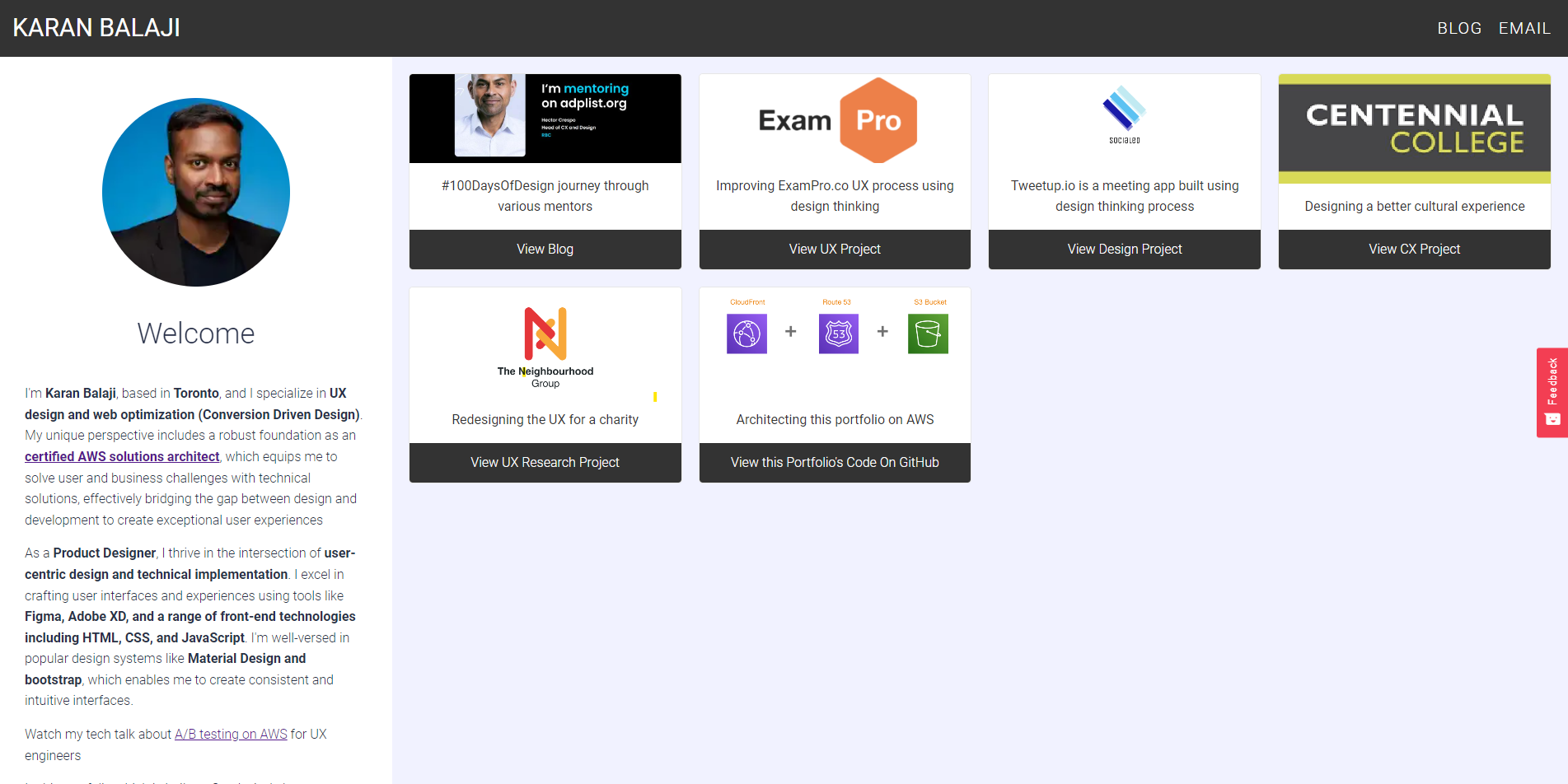
✍️ Every project in my portfolio tells a story of problem-solving, creativity, and collaboration. But it's essential that these stories are easily accessible and understandable to anyone who visits my portfolio. To achieve this, I focused on enhancing the card components for each project.
I added clear labels to each card, making it instantly apparent what each project is about. Here's a quick rundown of the projects I've showcased:
Improving ExamPro.co UX process using design thinking - A deep dive into the world of UX, showcasing my design thinking process.
Tweetup.io - A meeting app born from the design thinking process.
Designing a better cultural experience for Centennial College - A journey into CX design to elevate cultural experiences.
Redesigning the UX for a charity - An extensive UX research project aimed at creating meaningful impact.
Architecting this portfolio on AWS - A peek behind the scenes, where I share the code for this very portfolio on GitHub.
(How) - Applying User-Centric Design to My Portfolio
🖼️ The addition of labels to my portfolio's card components is a small change with a significant impact. It ensures that anyone who visits my portfolio can quickly grasp the essence of each project. It aligns with the user-centric design principle of clarity and simplicity.
As a designer, I understand the value of effective communication. Each label serves as an introduction, inviting visitors to explore the intricate details of my projects. Whether it's UX, CX, or design, I want my portfolio to be an accessible and informative platform.
As I continue on my #100DaysOfDesign journey, I'm not just refining my design skills; I'm also evolving my ability to communicate and connect through design. My UX portfolio is a testament to that commitment, and I can't wait to share more projects and insights with you.
Feel free to explore the updated portfolio, and if you're curious about the code behind it, you can find it on my GitHub page.
Stay tuned for more design discoveries, enhancements, and a deep dive into the world of user-centric design.