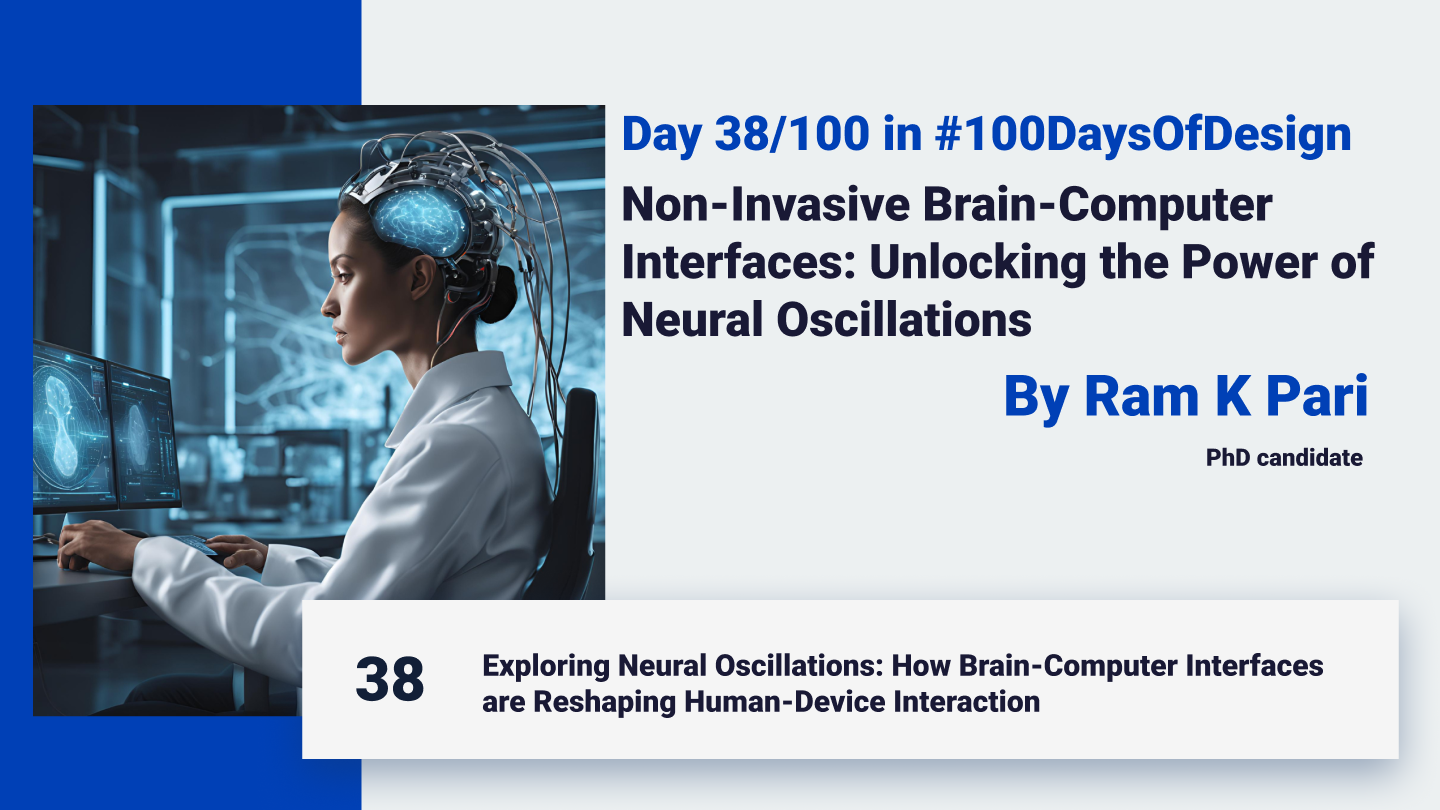
Day 38/100: Non-Invasive Brain-Computer Interfaces: Unlocking the Power of Neural Oscillations By Ram K Pari
Introduction: A Breakthrough in Brain-Computer Interaction In the ever-evolving field of brain-computer interfaces (BCIs), innovation is pushing the boundaries of what we can achieve. Ram Kumar Pari, a PhD candidate at Université Paul Sabatier Toulou...
Introduction: A Breakthrough in Brain-Computer Interaction
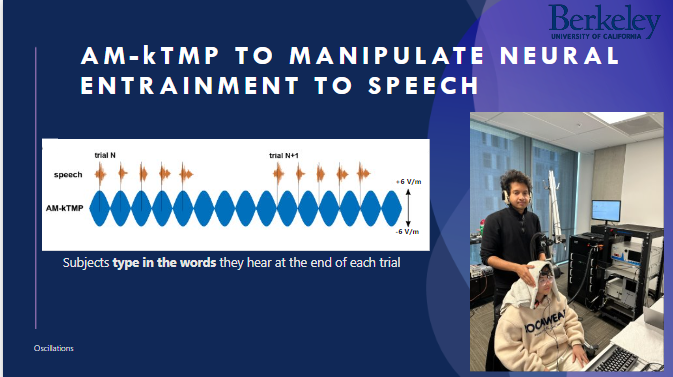
In the ever-evolving field of brain-computer interfaces (BCIs), innovation is pushing the boundaries of what we can achieve. Ram Kumar Pari, a PhD candidate at Université Paul Sabatier Toulouse, is at the forefront of this revolution. Ram is the first scientist to use kTMP, a new form of continuous magnetic stimulation, and the first to use it outside the company that developed it. His work, combined with the development of a new neurofeedback technique, is paving the way for a future where the brain directly interacts with machines in ways that were once the stuff of science fiction.
What: Unveiling the Mysteries of Neural Oscillations
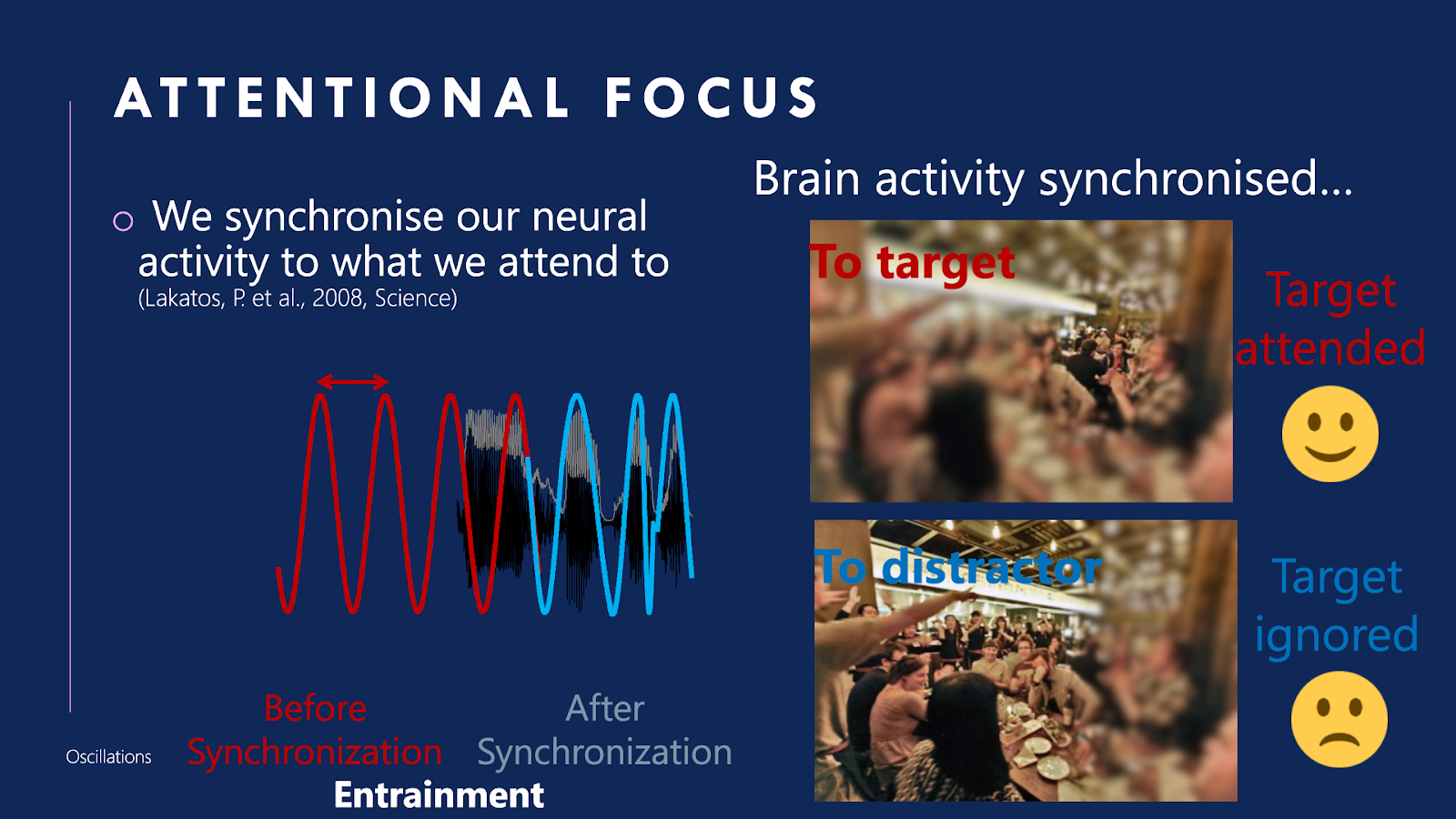
At the core of non-invasive brain-computer interfaces is the intricate world of neural oscillations—the rhythmic patterns that govern cognition, perception, and consciousness. These oscillations, which range from slow delta waves to fast gamma waves, synchronize different regions of the brain, enabling cognitive and sensory functions. Ram explains that one of the features of these oscillations, particularly in perception acts like a natural filter, helping the brain focus on relevant stimuli while ignoring distractions.
Ram's pioneering research focuses on decoding these oscillations through non-invasive methods like electroencephalography (EEG), a technique that measures the brain's electrical activity. This year also marks the 100-year anniversary of EEG, a landmark tool that has been indispensable in allowing researchers to peer into the brain’s inner workings without invasive techniques. The centennial of EEG reminds us of its lasting importance, even as new methods like kTMP push the field of modulating these oscillations into exciting new territories.
Where Are We So Far?
As we celebrate the 100-year anniversary of EEG, the field of brain-computer interfaces (BCIs) has reached new heights. Ram Kumar Pari's use of kTMP, a novel form of magnetic stimulation, marks a significant advancement in how we interact with and modulate brain activity. Ram is the first scientist outside the original company to implement this technique in experiments, contributing to breakthroughs in neural oscillations research.
However, the price of high-quality EEG equipment remains a barrier. Research-grade devices, such as Ceegrids, can cost around $5000 and require extensive research expertise to set up and use effectively. These high-end systems are crucial for fine-tuning brain oscillation measurements, but they are not clinical products. While commercial versions with dry electrodes are available at a lower price point, they often suffer from signal noise, limiting their effectiveness in precise applications.
The future holds promise, though, as technological innovation is driving down costs. Ram notes that future devices, which match the capabilities of today's research-grade equipment, could be available for significantly lower prices, possibly around $300. This drop in cost, combined with improved usability, could democratize access to EEG-based BCIs and bring them into mainstream use for both research and consumer applications.
Why: Decoding the Brain's Electrical Symphony
At the core of non-invasive brain-computer interfaces (BCIs) lies the challenge of understanding the brain's complex electrical patterns. The brain’s oscillations, measured using electroencephalography (EEG), provide a glimpse into how different regions of the brain communicate. However, as Ram explains, decoding these signals is far more complex than simply filtering out noise from sound.
The noise in EEG recordings is often high-dimensional and mathematically intricate, making it difficult to isolate relevant neural oscillations from the surrounding electrical activity. Ram notes that this complexity poses a significant hurdle for researchers, who must use advanced signal processing techniques to interpret the data. These techniques don't necessarily solve the noise issue but help study the modulation of brain oscillations, providing insights into how they can be influenced.
One existing method is transcranial alternating current stimulation (tACS), which uses electric fields to modulate brain activity. tACS is well-established and offers a non-invasive way to influence neural oscillations. Although it doesn’t directly address the noise problem in EEG, it provides a way to explore how specific oscillations can be targeted and manipulated for therapeutic purposes.
What Will the Future Be?
The future of non-invasive brain-computer interfaces (BCIs) holds remarkable promise. Ram Kumar Pari foresees that devices designed to directly interface with the brain will revolutionize human-computer interaction within the next 5 to 10 years. This shift, which Ram calls a transition from the computing revolution to the neural revolution, will dramatically lower the barriers to these technologies.
Currently, research-grade devices, such as Ceegrids, are expensive, priced around $5000, and require significant expertise to set up. These devices offer high precision for research but come with challenges like complex noise filtering. However, commercial solutions, such as dry electrode versions, already exist at lower price points but can suffer from noise issues. Ram anticipates that future iterations will bring the cost down significantly, potentially as low as $300 for research-grade capabilities, making them accessible to a much broader audience without compromising quality.
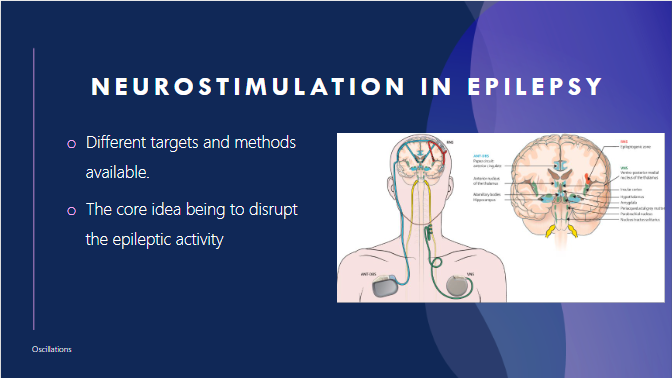
In addition to cost, Ram reveals a major breakthrough: non-invasive techniques that could treat conditions like epilepsy before resorting to invasive surgery or exhausting drug options. Currently, invasive stimulation is the last resort after drugs fail, but with non-invasive BCIs, the treatment could begin much earlier, potentially offering the same level of efficacy as drugs—without the associated side effects. This is especially important for patients like pregnant women, for whom drug treatments can pose serious risks to the fetus. By avoiding harmful side effects, non-invasive solutions could make a profound difference in treating epilepsy safely.
This non-invasive approach also hints at a broader revolution in healthcare, with the potential to reduce reliance on drugs and surgery, shifting treatment towards brain modulation techniques that leverage neural oscillations to restore function or alleviate conditions.
How: Bridging the Gap – External and Internal Approaches
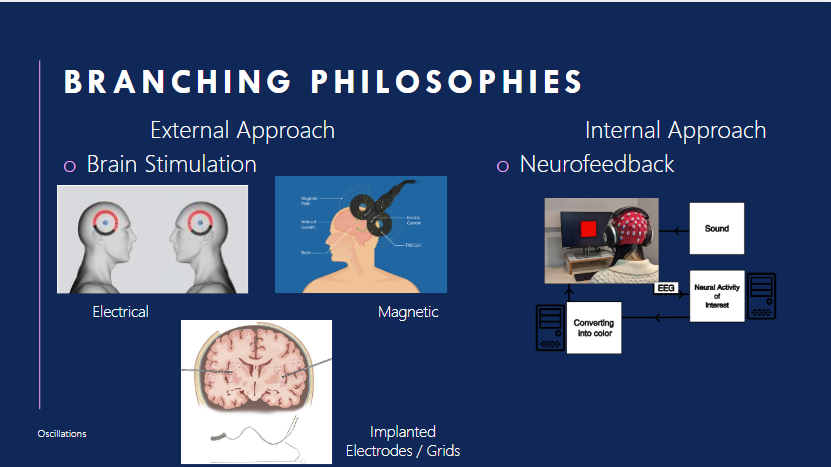
Researchers are taking two complementary approaches to overcome current challenges in brain-computer interfaces:
External stimulation: Methods like kTMP and tACS use alternating electromagnetic fields to influence neural oscillations, allowing researchers to modulate specific brain functions. This approach has the potential to enhance cognitive functions and treat neurological disorders in a non-invasive way.
Internal modulation: Techniques like neurofeedback empower individuals to consciously control their brainwaves. Through feedback and training, users can fine-tune their neural oscillations, improving cognitive performance and auditory attention in noisy scenarios.
Practical Applications: Transforming Lives
Non-invasive brain-computer interfaces (BCIs) offer groundbreaking potential across various domains, enhancing human abilities and addressing cognitive challenges in ways that could transform lives. Ram Kumar Pari highlights key areas where this technology could have a significant impact, including auditory attention, language learning, and more intuitive human-device interaction.
Auditory Attention and the "Cocktail Party Effect"
One of the most compelling applications is addressing auditory attention issues in elderly adults. Ram explains that while older individuals may not suffer from hearing loss per se, they often struggle with what’s known as the "cocktail party effect". This refers to the brain's ability to filter out irrelevant sounds in noisy environments, like focusing on a single conversation in a crowded room. The difficulty comes from altered neural oscillations that impair the ability to process relevant auditory information. Hearing aids don’t address this problem espcially when the physical hearing capabilities aren’t as affected. It offers a solution to enhance auditory attention by synchronizing neural oscillations with specific auditory stimuli.
This technology of Neurofeedback, in general has been available for the past 20 years, but Ram emphasizes that the combination of advanced BCI systems with standard hearing aids offers a promising avenue for improving auditory attention in the elderly, helping them better filter and focus on relevant sounds and also to age-related hearing loss.
Language Learning and Cognitive Enhancement
In addition to auditory applications, non-invasive BCIs could enhance language learning and overall cognitive processing. By tapping into the brain's natural neural oscillations, these interfaces can potentially accelerate language acquisition and optimize cognitive functions in healthy individuals. For example, aligning neural oscillations with specific language inputs could improve how quickly and efficiently learners grasp new languages, opening up new pathways for global communication and exchange.
Accessibility: Direct Interaction with Devices from the Brain
Looking further into the future, Ram envisions a world where individuals with disabilities or cognitive challenges can interact directly with digital devices using only their brain activity. Instead of relying on traditional interfaces like keyboards or touch screens, these users could command their devices by modulating neural oscillations, effectively bridging the gap between mind and machine. This development could vastly improve accessibility and independence for individuals with motor impairments or other conditions that limit physical interaction with technology.
Through these applications, non-invasive BCIs hold the potential to reshape how we engage with both the physical and digital worlds, offering new tools to enhance cognition, learning, and accessibility.
Towards a Future of Seamless Interaction
As foundational research progresses, Ram emphasizes the importance of pushing the field towards practical applications and consumer products. The modular and flexible nature of brain-computer interfaces allows for cost-effective development, which could lead to the creation of affordable consumer devices in the near future.
The implications of this technology extend beyond healthcare. BCIs have the potential to revolutionize industries like pharmaceuticals, where drug-free treatments for neurological disorders become a reality. In this future, the boundaries between human cognition and digital interfaces blur, enabling a new era of seamless interaction between the brain and the digital world.
Conclusion: From the Brain to the World
Ram Kumar Pari's groundbreaking research into non-invasive brain-computer interfaces, particularly his work with kTMP and new neurofeedback techniques, is unlocking the potential of neural oscillations to transform the way we interact with technology. As the field evolves, the possibilities for direct brain-to-device interactions grow ever closer, heralding a future where the brain seamlessly bridges the gap between human cognition and digital environments.